Custom labels and packaging for your clothing brand
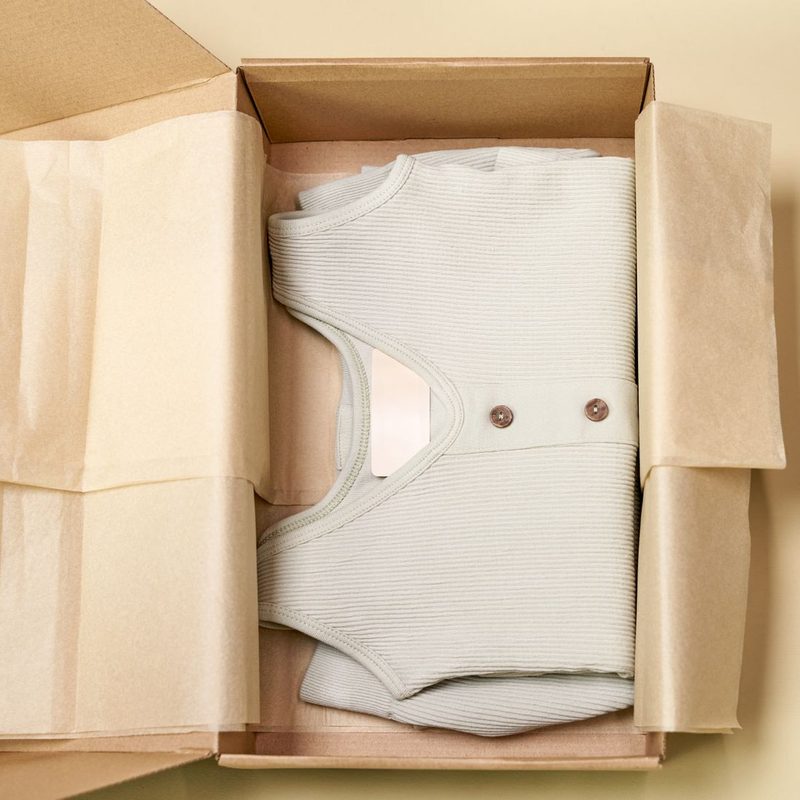
Labels and packaging are the cheapest part of your order and the part customers touch first. Get them wrong and the garment feels cheap no matter what it cost to make. Get them right and nobody notices, which is the point. The hard part is that there are eight or nine decisions here, they all interact, and the lead times are longer than most first orders allow for.
Woven labels versus printed labels
A woven label is made on a loom. The text is part of the fabric, so it does not fade or peel in the wash. A printed label is fabric with ink on it. Cheaper, faster, and fine for most casual wear, though the ink can crack after 30 or 40 washes if the supplier uses bad ink.
Woven labels cost about 0.08 to 0.25 USD each depending on size, color count, and whether you use damask or satin. Printed labels run 0.03 to 0.10. At 500 units the difference is 60 dollars. That is not the place to save money.
Where the label goes matters too. Center back neck is standard. A side seam label near the hem is common on basics and costs nothing extra. Some brands put the main label on the waistband for pants, which needs a different fold and a different supplier spec.
Care and content labels are not optional
Most markets require a care label with fiber content, washing instructions, and country of origin. The US wants it permanently attached. The EU has its own symbol system and language requirements. If you sell in both, you usually need two label sets, and that doubles your label minimums.
- Fiber content by percentage, with tolerances. 95 percent cotton and 5 percent elastane is fine. Cotton blend is not.
- Country of origin. This is where the garment was assembled, not where the fabric came from.
- Care instructions in the language of the market. French and German are required for most EU sales.
- A tracking code or RN number if your retailer or marketplace requires one.
Getting this wrong is one of the few labeling mistakes that carries a fine. It is worth 200 dollars of legal review before you print 3,000 labels. Cheaper than a recall.
Hangtags and the unboxing
Hangtags are cheap theater. A 350gsm card stock tag with a spot UV logo costs maybe 0.04 USD at 2,000 pieces. It changes how the garment feels in the hand. Most factories will source them if you ask, but a dedicated printer gives you better paper options and usually a better price.
The string matters more than people think. A cheap plastic barb looks like a cheap plastic barb. Cotton string or a safety pin costs almost nothing more and reads better.
Polybags, tissue, and the rules around them
Every garment ships in a bag. The question is which bag and what is printed on it. Clear LDPE bags are standard and cheap. They also carry a suffocation warning requirement in the US and some other markets, printed on the bag or on a label.
If you sell on Amazon, the bag needs a suffocation warning and a barcode that scans without opening it. If you sell direct, you can use a compostable bag, but expect to pay 3 to 5 times more and check that it survives a month in a warehouse without going brittle.
Tissue paper, a sticker seal, and a printed thank you card add maybe 0.15 USD per unit. Whether that is worth it depends on your return rate and your price point. At 40 dollars a tee it is. At 12 dollars it is not.
Ordering timeline and minimums
Labels have their own lead time, separate from garment production. Woven labels take 10 to 15 days to make. Printed labels take 5 to 7. Polybags with custom printing take 12 to 18. If you approve your labels two weeks before the ship date, you will miss it, and the factory will not hold the line for a label.
Minimums are the other trap. A woven label maker might require 1,000 pieces per design. You need 300. You will pay for 1,000 and store 700, or you will pay a small-order surcharge of 30 to 50 percent. Neither is fatal, but budget for it before you choose a design with six colorways.
One rule I would give any brand: spend the extra 300 dollars on labels and hangtags before you spend it on a nicer photoshoot. The label is in the customer's hand. The photoshoot is on a screen they scroll past in four seconds.
Ready to start your brand?
Tell us what you want to make and we'll tell you honestly whether it's worth it.
Contact Us