How to create a tech pack for clothing manufacturing

A tech pack is the package of information a factory needs to make your garment without calling you three times a day. That is the whole purpose. It is not a portfolio piece and it is not a mood board. It is a working document, and the factories that quote you fastest are the ones that receive a complete one.
What goes in a tech pack
A tech pack a factory can actually use carries the same core set of information, whatever the garment is.
- Flat sketches of the front and back, drawn to scale
- Measurements with points of measure marked, plus tolerances
- Fabric and trim specs: weight, composition, reference supplier
- Construction notes: stitch type, stitch density, seam allowance, hem depth
- Color standards as Pantone TCX numbers for every material
- Label, hangtag and packaging placement
- Size grading rules, or a full size run
- Artwork in vector format with print size and placement
You can assemble this in Excel and export to PDF. Most small brands do, and it works. Pattern software earns its cost somewhere around twenty or thirty styles, not before.
The flat sketch does most of the work
A fashion illustration shows attitude. A flat sketch shows construction. Draw it in black lines on white, front and back, with no shading and no model. Every seam, pocket, dart and topstitch line should be visible, and topstitching gets its own line style so the sample room does not guess.
Most arguments at sample stage come from a drawing where the shoulder seam sat in an ambiguous place. Move it two centimeters and the pattern changes, the fabric consumption changes, and the price changes with it.
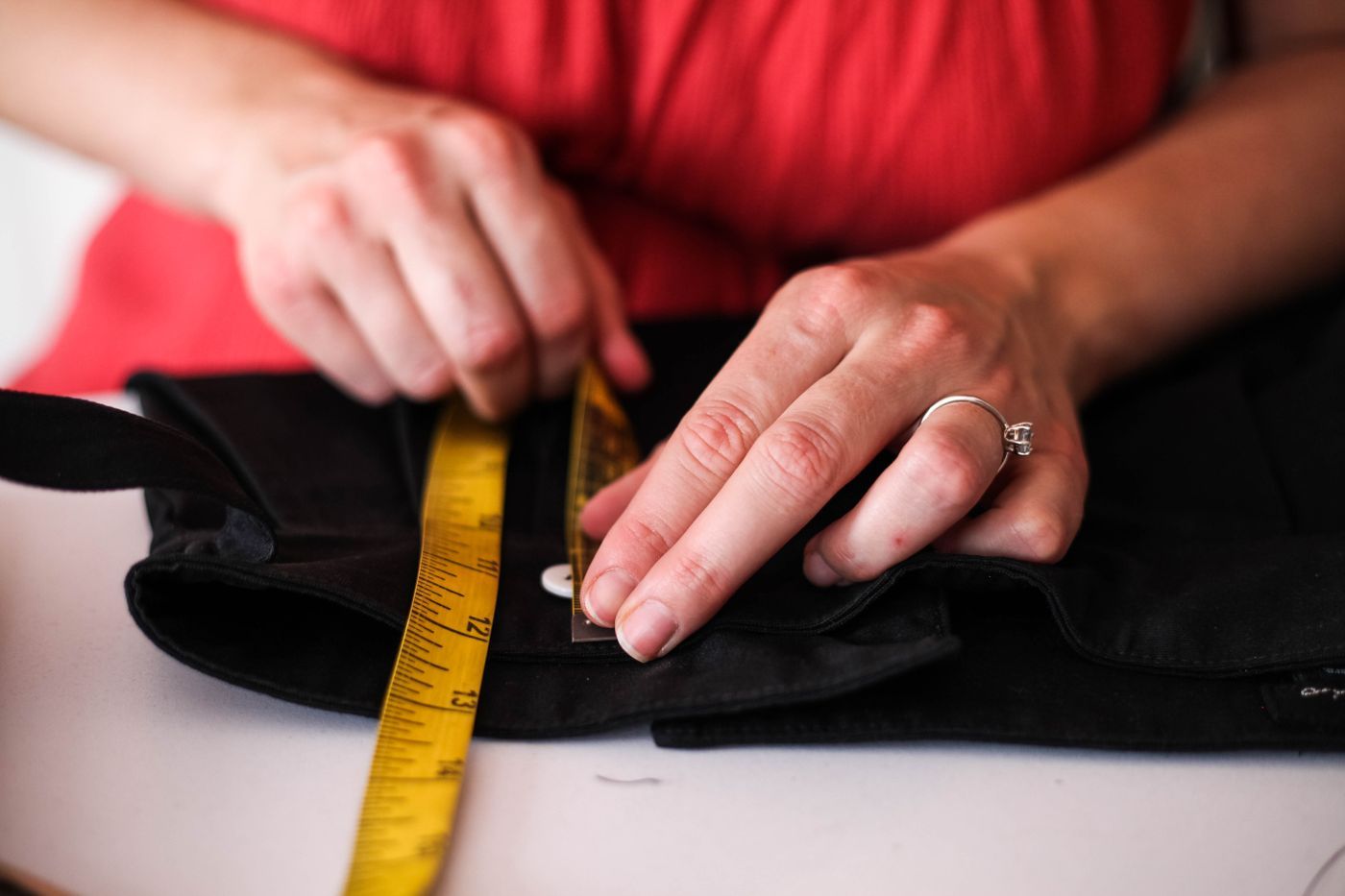
Measurements without points of measure are useless
A number alone means nothing. Chest width of 52cm could mean flat across the front, all the way around, or taken two centimeters below the armhole. Pin it down in words, and mark the point on the sketch.
Write the tolerance next to every measurement. Knits usually get plus or minus one centimeter. Wovens can hold half a centimeter. If you demand tighter than that on a soft fabric, you will pay for it in rejections, because the fabric moves more than your tolerance allows.
Construction details decide the quote
Two factories can quote the same tee at very different prices because they read the construction line differently. A single needle coverstitch hem costs more than a double needle one. Fifteen stitches per inch takes longer than ten. A flat felled seam on a chambray shirt adds minutes per unit, and minutes per unit is how a factory prices.
Spell out seam allowance. Three eighths of an inch is common in wovens, a centimeter in knits. Use numbers rather than words if the factory works in a different unit system than you do.
What people leave out
- Care label content and where it sits
- Whether the fabric is pre-shrunk or garment washed
- Thread color for each seam
- How the garment is folded for packing
- Who approves the bulk fabric against the lab dip
None of these are glamorous. All of them cause a production hold somewhere down the line, usually at the worst possible moment.
Revise it, then version it
A tech pack is alive. Round one goes out, the factory sends questions back, you fix the drawing, and the file changes. Keep a version number and a date on page one. Never email a file called techpack-final-final.2.pdf, because in two months nobody will know which one the factory is building from.
Send the revised pack with changes highlighted, and ask the factory to confirm in writing that they have the current version. That one habit prevents most of the disputes that surface in the first bulk order.
A good tech pack takes a day or two to build for a simple style. It saves that time back at sampling, again at costing, and once more at production. It is the difference between a factory that understands your garment and one that builds a reasonable guess.
Ready to start your brand?
Tell us what you want to make and we'll tell you honestly whether it's worth it.
Contact Us