How to vet a clothing factory before you send money
Most bad factory experiences begin with a deposit. The money leaves your account, the samples quietly stop matching the photos you approved, and the person who answered every email in March goes silent in June. None of that is bad luck. It is what happens when nobody checks anything before the wire transfer.
Check the license, then check what it covers
Every factory in Dongguan can show you a business license. Ask for the scan and read the registered scope of business. It should list garment manufacturing, not trading or import and export. A trading company with a license is not a crime, but you should know which one you are talking to, because the price and the accountability are different. Cross-check the company name against the name on the bank account. If the account belongs to a person instead of the company, ask why in writing.
Ask for a live walkthrough, not a photo album
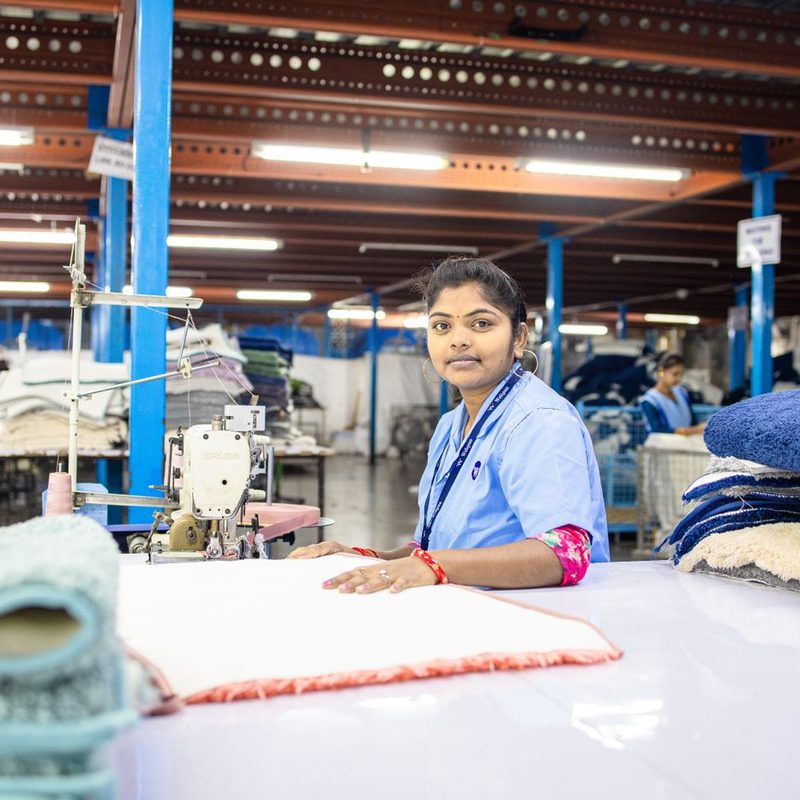
Photos are chosen. A video call where you pick the camera angle is closer to the truth. Ask them to walk from the cutting table to the sewing lines and keep the camera up the whole time. Count the machines. A factory claiming 120 operators should have roughly that many machines visible, plus cutting tables, fusing equipment, and a finishing area. Ask to see the same corner twice, ten minutes apart, and watch whether the work in progress has moved.
Two things I would look for on that call: how the bundles are labeled, and whether the floor is clean at 3pm rather than 9am. Bundle tickets with style number, size, and quantity tell you the factory tracks work. A floor covered in loose pieces tells you the opposite.
Ask who actually sews the order
Subcontracting is normal. Hiding it is not. Ask directly: will this order run in this building, and if any operation goes out, which one and to whom? Embroidery and printing often go out, and that is fine. Main seams going out to a village workshop is a different risk, because you lose control of the needle, the thread, and the timeline. Get the answer by email so it stays on record.
Pay for a sample and treat it as a test
A free sample costs you nothing and tells you nothing. Pay for it, and pay a realistic price. Then look at three things.
- Construction: even topstitching, no puckering at the seams, clean bartacks where stress lands.
- Measurement: check five points against your spec sheet. A 1cm miss on chest width is a warning.
- Communication: note how they respond when you send corrections. Do you get a revised sampling plan with dates, or a promise?
Expect one revision round to take 10 to 14 days including shipping. If they quote three days, they are not sampling properly.
Negotiate money terms like you expect problems
Standard terms are 30% deposit and 70% before shipment, which leaves you exposed at the worst moment. Push for the balance against a passed inspection, not against a photo of cartons. On orders above $5,000, book a third-party pre-shipment inspection with a company like SGS, Bureau Veritas, or QIMA. It costs $300 to $400 and buys you a measurement report and photos of the actual goods. On tooling, screens, and patterns, put in writing who owns them after the order. You paid for them, so they should be yours, and they should be handed over on request.
Call two current customers
Ask for two customers who ordered in the last six months, in a similar product category. Then actually call them. Ask what went wrong on their last order and how the factory handled it. Every factory has a bad order. The useful signal is whether they fixed it or blamed the customer.
None of this guarantees a smooth run. Factories change supervisors, lose workers before Chinese New Year, and take on too much in peak season. But a factory that answers these questions clearly, puts commitments in writing, and does not flinch at an inspection is a much better bet than one that only sends a glossy catalog. If a supplier gets annoyed at being asked, that is your answer.
Ready to start your brand?
Tell us what you want to make and we'll tell you honestly whether it's worth it.
Contact Us