Screen printing vs embroidery vs DTG: which one to pick
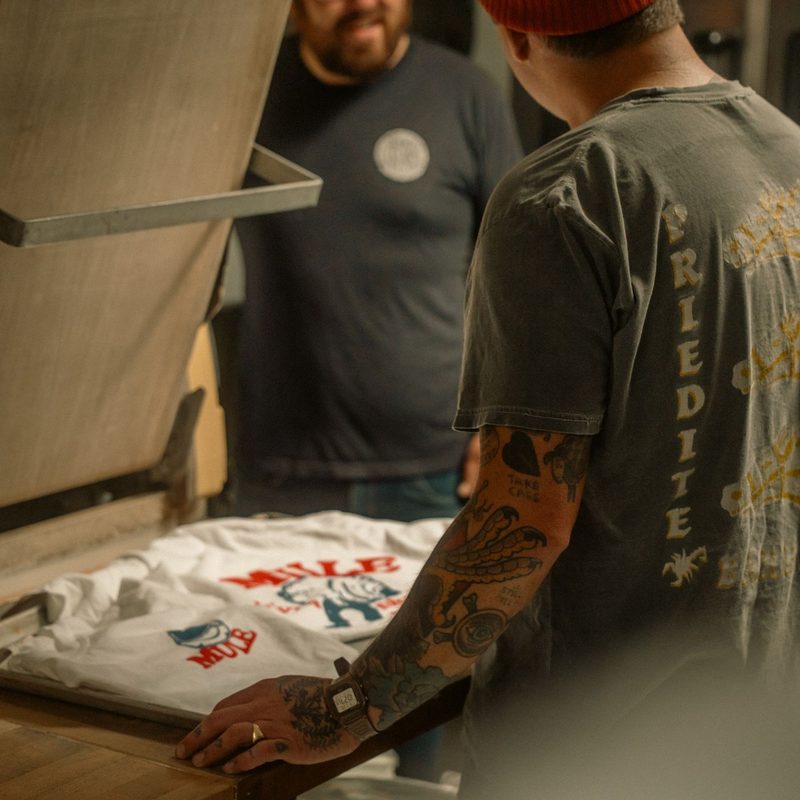
These three decoration methods are not interchangeable. Each has a quantity where it makes sense, a fabric it struggles with, and a cost curve that crosses the other two. Choosing wrong costs you money at volume or quality at small runs, and usually both.
Screen printing: cheap at volume, painful below 50
Screen printing pushes ink through a mesh stencil, one screen per colour. Setup runs about 10 to 30 USD per colour at most Asian factories, higher in the US and Europe. After setup, the per-piece cost collapses. A one-colour print on 300 tees can land under 1 USD each. On 24 pieces it is 4 to 6 USD each, because setup dominates.
Ink choice matters more than people think. Water-based inks sink into the cotton and feel like almost nothing. Plastisol sits on top, stays opaque on dark shirts, and feels like a layer you can pick at. On a 220gsm heavyweight tee plastisol is fine. On a thin summer tee it feels like a sticker.
Embroidery: durable, priced by stitch count
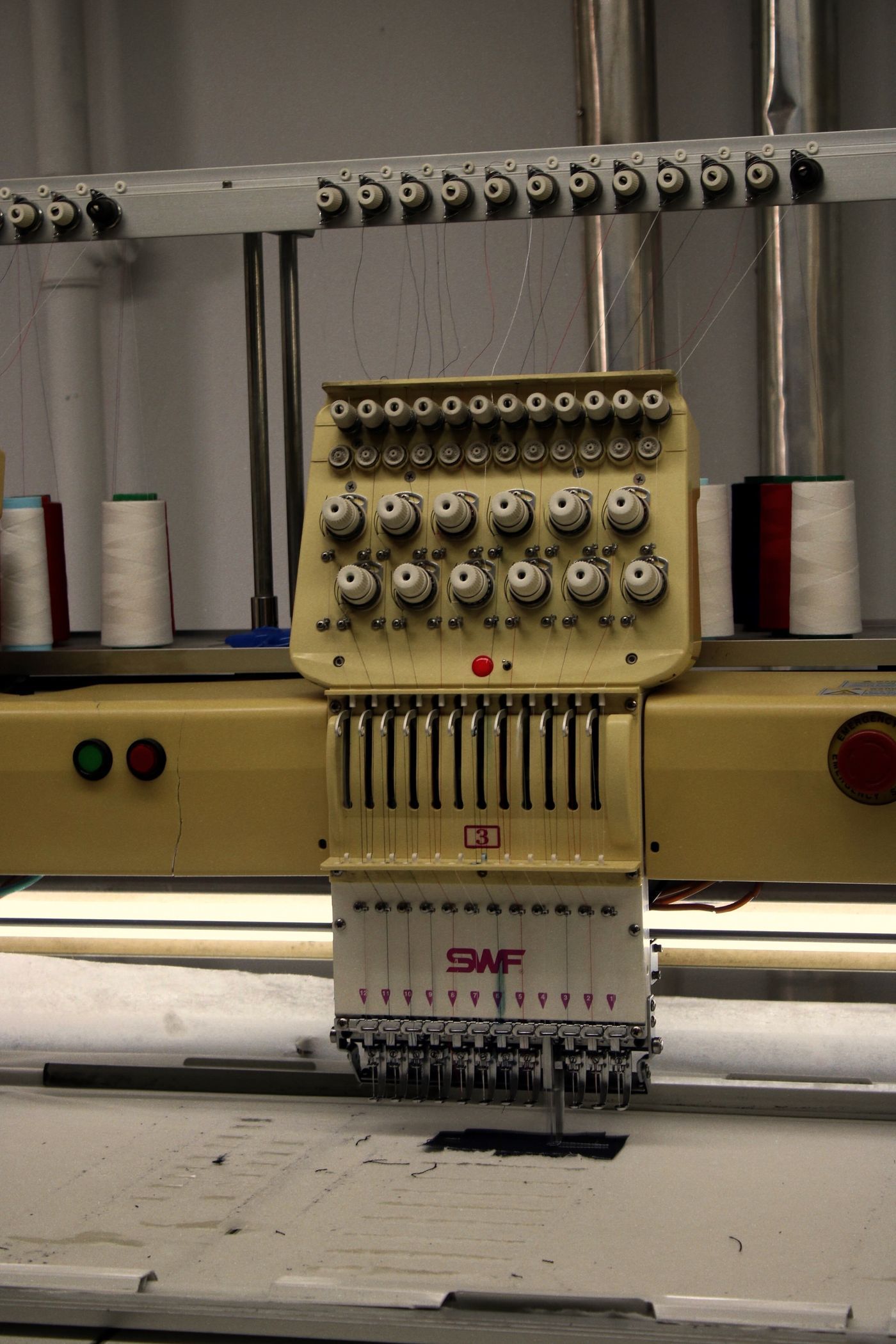
Embroidery stitches thread into the fabric. You pay a one-time digitising fee of 25 to 60 USD, then a price per 1,000 stitches. A left-chest logo at 6,000 to 8,000 stitches runs roughly 1 to 2.50 USD at volume, 3 to 5 USD on a small run. It never cracks, never fades, and survives industrial washing better than any print.
The limits are real. No fine gradients. Text under about 5mm turns to mush. Heavy coverage stiffens the panel and pulls on thin jersey unless the factory adds a backing. Best on polos, caps, jackets, and workwear where the logo has to last years.
DTG: no setup, higher unit cost
Direct to garment prints inkjet style onto the shirt. No screens, no setup, no minimum. A print costs roughly 3 to 8 USD depending on size and machine. It handles photographs, gradients, and twelve colours for the same price as one, which is where it wins outright.
The catch is fabric. DTG needs cotton, or a poly blend with pretreatment that dulls the result and feels slightly stiff. Wash durability is weaker than screen print, holding well for 30 to 50 washes rather than the life of the garment. On a dark shirt the white underbase is thick and can crack first.
Where the curves cross
- Under 24 pieces with complex art: DTG, no question.
- 25 to 60 pieces, one or two colours: close. Screen is usually cheaper, DTG is faster to set up.
- 100 pieces or more, one to three colours: screen print, clearly.
- A five-colour or photographic design at 30 pieces: DTG, because five setups cost more than the run.
- Logo on a polo, cap, or jacket: embroidery. DTG on pique knit looks muddy.
Run the numbers once and the shape becomes obvious. One-colour front print on 100 tees: 20 USD setup plus 1 USD a print is 120 USD total. The same art on DTG at 5 USD each is 500 USD. Now make it a five-colour photographic print at 30 pieces: screen is 100 USD in setups plus prints, DTG is 150 USD flat. The crossover moves with colour count far more than most people expect.
Combining them
A common setup is a screen-printed front with an embroidered sleeve or back neck. Two processes, two lead times, and the garment has to travel between them, so add a week. Check that the embroidery hoop does not crush a print nearby. Some factories run both in house; ask before you design something that needs shipping between workshops.
Fabric decides more than price
Screen print needs a flat, absorbent surface. Ribbed knits, mesh, and deep-pile fleece print badly. DTG fights dark poly blends. Embroidery pulls on thin jersey without stabiliser, and on stretch fabric the stitch density has to drop or the logo puckers into a circle. Send the actual fabric, not a photo of it, before you approve a decoration sample.
Pick by quantity, then colour count, then fabric. Then get a physical sample on your real garment and wash it twice before you order 500 of anything.
Ready to start your brand?
Tell us what you want to make and we'll tell you honestly whether it's worth it.
Contact Us